
Tuntun Children's Hospital is here for every step of your baby's growth journey.

At Tuntun Pediatrics, we don't just look for a positive or negative result. We comprehensively analyze your child’s specific symptoms alongside their test data
to identify their exact allergy type and reaction patterns.
This allows us to build a highly precise, individualized treatment strategy.
Even with the exact same cough or runny nose, the underlying mechanism driving the allergic reaction can vary drastically from child to child.
Clinically, allergies can present in several different ways.
Recognizing these distinctions is the foundation of precision allergy care.

Children experiencing allergic symptoms are evaluated based on their clinical presentation
and test results.
By accurately categorizing the allergy type, we avoid unnecessary testing and treatments, ensuring we set the right direction for your child's care.
Blood tests identify specific allergens.
Treatment and management are directly targeted
at these known triggers.
Allergic symptoms are clear, but blood tests do not reveal a specific trigger.
We focus our evaluation on the child's immune response patterns
and symptom progression.
Markers of an allergic reaction are observed, but a specific allergen cannot be definitively pinpointed.
We consider symptom changes
alongside additional clinical indicators.
We do not apply a "one-size-fits-all" panel.
We selectively perform only the tests your child truly needs based on their presentation and initial findings.
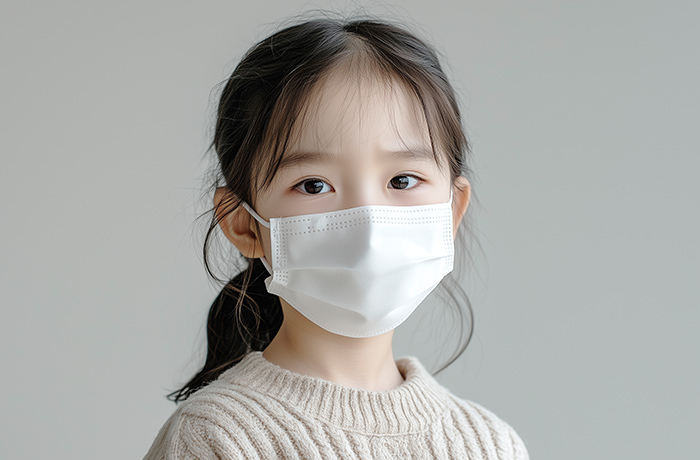
Here is how we evaluate your baby's condition:
We look at symptoms like rhinitis, coughing, or skin flare-ups alongside the timing of the reactions,
the home environment, and family history
to determine if allergy testing is truly necessary.
→ We observe and monitor without additional testing.
→ We proceed to the initial precision allergy evaluation.
Blood tests help confirm the presence of an allergic reaction
and check the immune system's response against major allergens.
→ We monitor the progression based on symptoms.
→ We determine a comprehensive plan for treatment and management.
Sometimes, it's difficult to tell from symptoms alone whether an allergic reaction is driving rhinitis, asthma, or another condition entirely.
이때 알레르기 천식 평가는 기도 내 알레르기성 염증 반응 여부를 확인하는 데 도움을 줍니다.
This assessment serves as a crucial reference for diagnosing allergic asthma and deciding the necessary intensity and direction of treatment.

If allergic airway inflammation is present:
→ Indicator levels tend to be elevated.
If caused by simple irritants (dust, temporary environmental triggers):
→ Indicator levels generally remain stable without significant spikes.
※ Results are comprehensively interpreted alongside the child's age, symptoms, and other clinical data.
Test results serve as a 'tool to determine treatment.'
Allergy testing isn't just about stamping a diagnosis on your child.
It is an insightful process designed to help us understand your child's unique allergy profile and determine the best path forward.
We never base treatment decisions on test numbers alone.
We weigh symptoms, test values, and lifestyle factors together.
Treatment is introduced gradually, and only when medically necessary.
Allergy treatment varies depending on the specific type of allergy and the level of inflammation.
We don't use a "cookie-cutter" approach;
we provide exactly the care your child needs.

 A Message